
Module 03 · Engineering
CutisBiofoundry — robotic strain development.
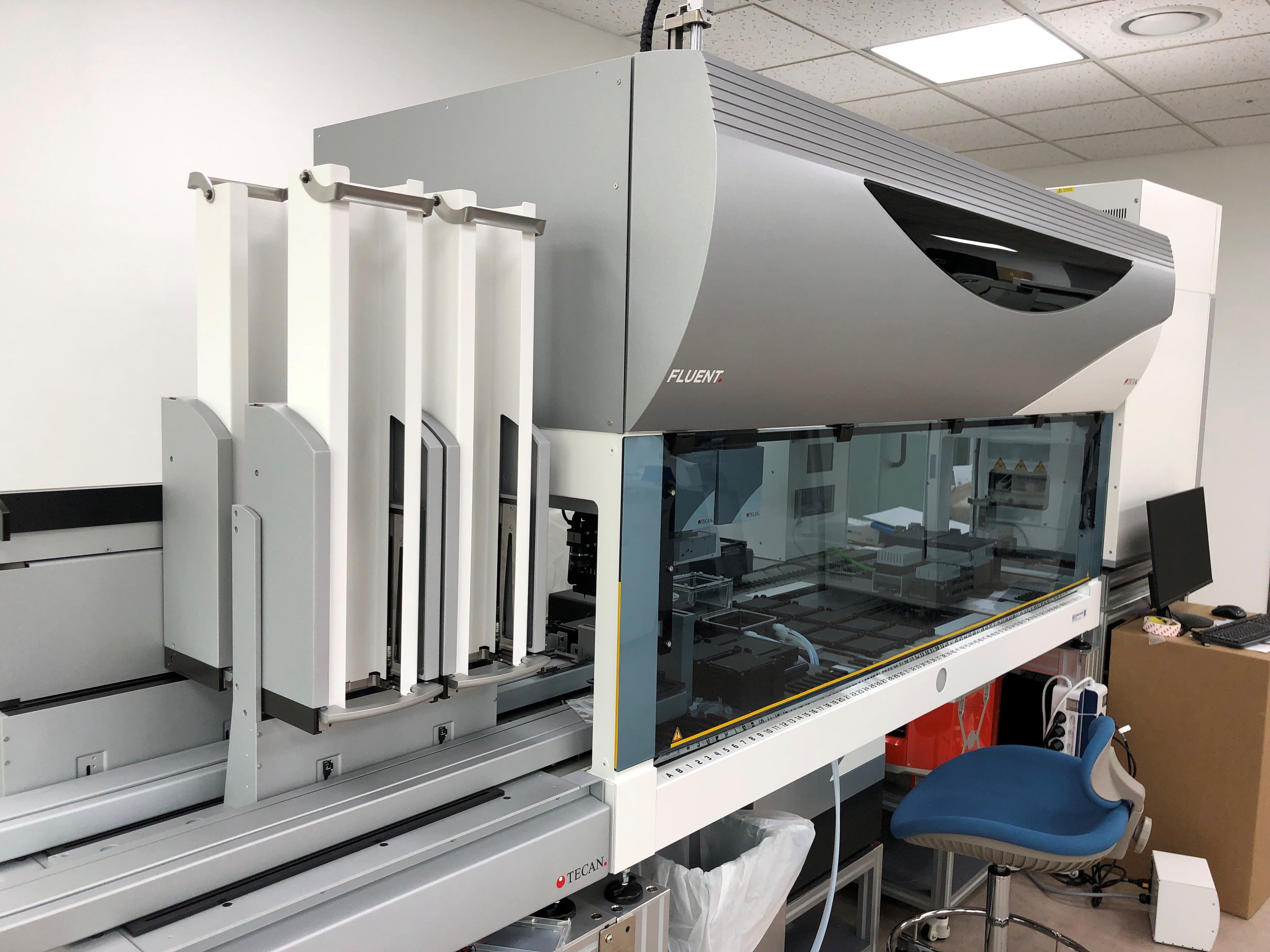
The CutisBiofoundry is a robotics-based system that builds and evaluates large libraries of gene variants at high speed. Its specialty is the bottleneck: the rate-limiting enzyme on the route from biomass to the target molecule.
The bottleneck
One slow enzyme decides the productivity of a whole pathway.
A route from biomass to a target molecule runs through many enzymes. The slowest of them limits how much product the cell can make, however well the rest of the pathway is designed. Improving that enzyme is where productivity is won.
The biofoundry compares variant libraries in parallel using automated experiments. The resulting data guides the next design and screening cycle.
Design–build–test–learn
Model, build, test, learn.
One round of the loop, repeated until the bottleneck is relieved.
Model: AI protein modelling proposes variants of the rate-limiting enzyme.
Build: Robotic liquid handling and colony picking assemble the variant library.
Test: Plate-based cultivation and readers measure each variant’s performance in parallel.
Learn: Models fit the results and select the next library, so each round starts smarter.
Strain development
From pathway search to production strain.
How the biofoundry turns a key starting strain into an industrial production strain.
- 01ExploreSearch the genetic pathway, design the target route and select the best starting strain.
- 02EngineerIntroduce new genes, remove side branches and optimise the metabolic pathway.
- 03ImproveRelieve the rate-limiting step through modelled variant libraries.
- 04SecureTurn improved enzymes and strains into patents and hand the strain to MtoM.
What it delivers
Patents and productivity.
- 01
New patents
Improved enzymes and strains that are novel and protectable.
- 02
Higher productivity
More product per cell and per run, measured before scale-up begins.
- 03
Shorter cycles
Parallel screening and automated handling connect each round of experiments to the next.
- 04
Data that compounds
Every round adds to the models that design the next one.
Related products and research
Explore the product context.
Blugene
Explore bio-based indigo and its textile applications.
VSTER lab
Explore hair and skin booster products and related research directions.
Next module
From an improved strain to a repeatable process
MtoM takes the strain the biofoundry delivers and develops the fermentation and recovery process around it, from laboratory development through pilot validation.