
Analysis service
CutisBiome — Skin microbiome analysis
CutisBiome analyses skin and scalp bacterial communities with AEA™ primers and 16S rRNA analysis. Reports combine Korean skin reference data with dermatologist review to help clinics and research partners understand composition, diversity and changes before and after care.
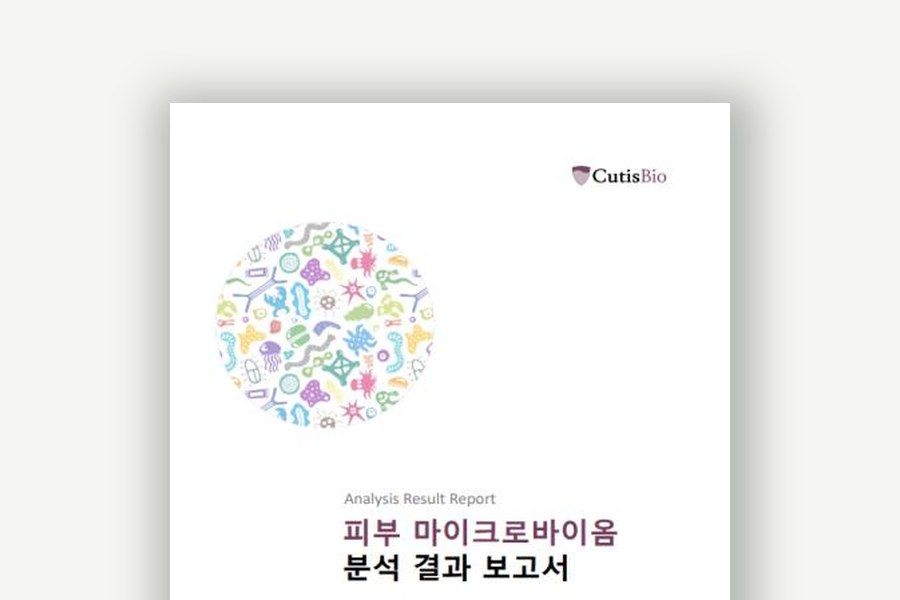
CutisBiome at a glance
- Provider
- CutisBio
- For
- Clinics, research teams and cosmetics or ingredient-development partners
- Deliverables
- Non-invasive swab collection kit, bacterial-community analysis, dermatologist review and a tailored report
- Scope
- Professional information for observing and comparing skin microbial communities
The industry problem
Reading the skin ecosystem beyond what is visible
- 01
Visible skin observations do not reveal microbial community composition. Microbiome analysis adds another perspective.
- 02
Skin samples require consideration of microbial biomass and human-derived DNA, supported by appropriate analysis and quality review.
- 03
Comparisons across time or care programmes depend on consistent collection conditions and analysis.
Our approach
Skin-focused analysis and professional review
Proprietary AEA™ primers analyse 16S rRNA genetic information from skin bacteria. The analysis examines the composition and relative abundance of key species, including Cutibacterium acnes, Staphylococcus epidermidis and Staphylococcus aureus.
Analysis takes account of the low microbial biomass of skin samples and interference from human-derived DNA. Overlapping sequence comparison, quality filtering and bioinformatics support the assessment of community composition and diversity.
Accumulated Korean skin microbiome reference data are considered in the context of age and skin type. Interpretation also takes account of sampling site, collection conditions and the comparison group.
Results are reviewed by a dermatologist and supplied in a professional report. The report documents skin microbes; it does not replace medical diagnosis or establish treatment outcomes.
How it works
From sample collection to a tailored analysis report
Sample quality
Skin samples contain limited microbial material alongside host DNA. Collection conditions and sample quality are reviewed with these characteristics in mind.
Collection · sample context
Skin-focused molecular analysis
Proprietary AEA™ primers focus 16S rRNA analysis on skin bacterial communities. Overlapping sequencing reads are considered as part of the data-quality review.
AEA™ · 16S rRNA
Context for comparison
A Korean reference database supports interpretation alongside age, skin type, sampling site and collection conditions.
Korean reference database
The analysis and comparison scope is agreed for each enquiry. Findings are interpreted in the context of the sample and its collection.
Community composition & diversity
Bacterial community composition and diversity indicators, including the Shannon index, describe the sample and changes over time.
Key species in context
Relative abundance of C. acnes, S. epidermidis and S. aureus is reviewed alongside the overall community and skin context.
Microbial balance
Dysbiosis scores and grades offer a contextual comparison with reference data, rather than a standalone assessment of disease.
Distribution & vulnerability indicators
Beneficial-bacteria distribution and inflammation-vulnerability indicators provide reference information. Bacterial roles depend on the surrounding skin environment.
Skin-age-related indicators
Biological skin age and aging-related indicators are explored as reference information. They do not determine actual age or diagnose aging.
Changes over time & literature
Comparisons across sampling time points are considered with collection conditions. Literature-based information adds context about the microbes observed.
Report items and comparison scope are agreed at enquiry. A dermatologist reviews the findings and their interpretation. This observational report does not replace medical diagnosis or treatment.
- Collect
Agree the purpose and sampling site, then collect a sample with a non-invasive swab using the supplied kit and instructions.
- Molecular analysis
Read bacterial genetic information through 16S rRNA analysis with AEA™ primers.
- Bioinformatics
Review data quality and analyse community composition, diversity and the relative abundance of key species.
- Professional review
A dermatologist reviews microbial indicators and changes in the context of reference data and the comparison purpose.
- Report
Receive a report and interpretation aligned with the agreed scope. Where comparison samples are available, changes before and after care are included.
Kit & report
The collection kit and report
The supplied kit and report cover. Scope and scheduling are discussed for your analysis purpose.
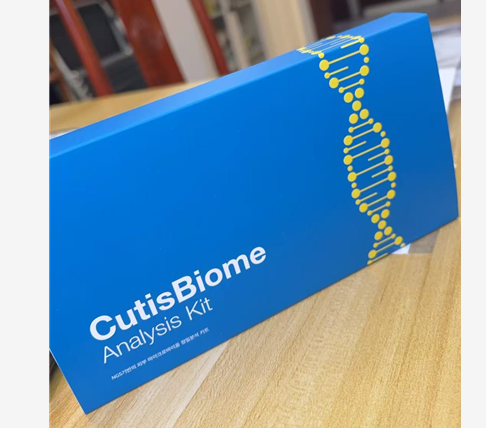
01The CutisBiome kit for sample preparation following the supplied instructions. 02Report cover without individual sample results.
Why it matters
What supports the analysis
- 01
Skin-focused approach
Analysis informed by key bacterial communities and skin-sample characteristics
- 02
Data-quality review
Review of the analysis process and scope of interpretation
- 03
Korean skin reference data
Comparisons informed by age, skin type, sampling site and collection conditions
- 04
Professional review
A professional report reviewed by a dermatologist
Applications
Applications of the analysis service
Plan the analysis and comparisons for skin and scalp care, product development or research.
Skin and scalp care
Supplementary information on bacterial communities in the context of inflammatory skin conditions, skin ageing and scalp care
Cosmetics and ingredient development
Analysis plans and reports comparing microbial composition and diversity before and after cosmetic or ingredient use
Research partners
Discussions of sampling and comparison plans, microbial indicators and interpretation tailored to the research purpose
Public status
Contact us to discuss availability and the requirements for your application.
FAQ
Frequently asked questions
What is CutisBiome?
CutisBiome is CutisBio’s skin microbiome analysis service. It analyses bacterial communities in skin and scalp samples and provides professional reports informed by Korean skin reference data and dermatologist review.
How is CutisBiome different from CocoBiome?
CocoBiome is the name of component 1 of CocoFILL. CutisBiome is a separate analysis service, not a product component.
How can I request an analysis?
Tell us the analysis purpose, intended participants, sampling site and comparison plan. We will discuss scope, kit preparation and scheduling.
What does the report contain?
Reports describe community composition, the Shannon diversity index, key-species relative abundance and comparison findings. Depending on the agreed scope, they may also include dysbiosis scores and grades, beneficial-bacteria distribution, inflammation-vulnerability and biological-skin-age reference indicators, and literature-based species information. Deliverables and interpretation limits are confirmed during the enquiry.
Can the analysis compare changes before and after care?
Samples collected under comparable conditions can help examine changes in microbial communities. An observed change alone does not establish the therapeutic effect of a product or procedure, or a causal relationship.
Is the report a medical diagnosis?
No. It is professional observational information reviewed by a dermatologist and does not replace diagnosis or treatment.
When will results be available?
Scheduling is discussed for the samples and analysis scope at the enquiry stage.
Next step
Discuss CutisBiome.
Tell us your intended use and the information you need. We will help you identify a way to start.