VSTER lab · Hair booster

CeraXosome — Professional hair booster

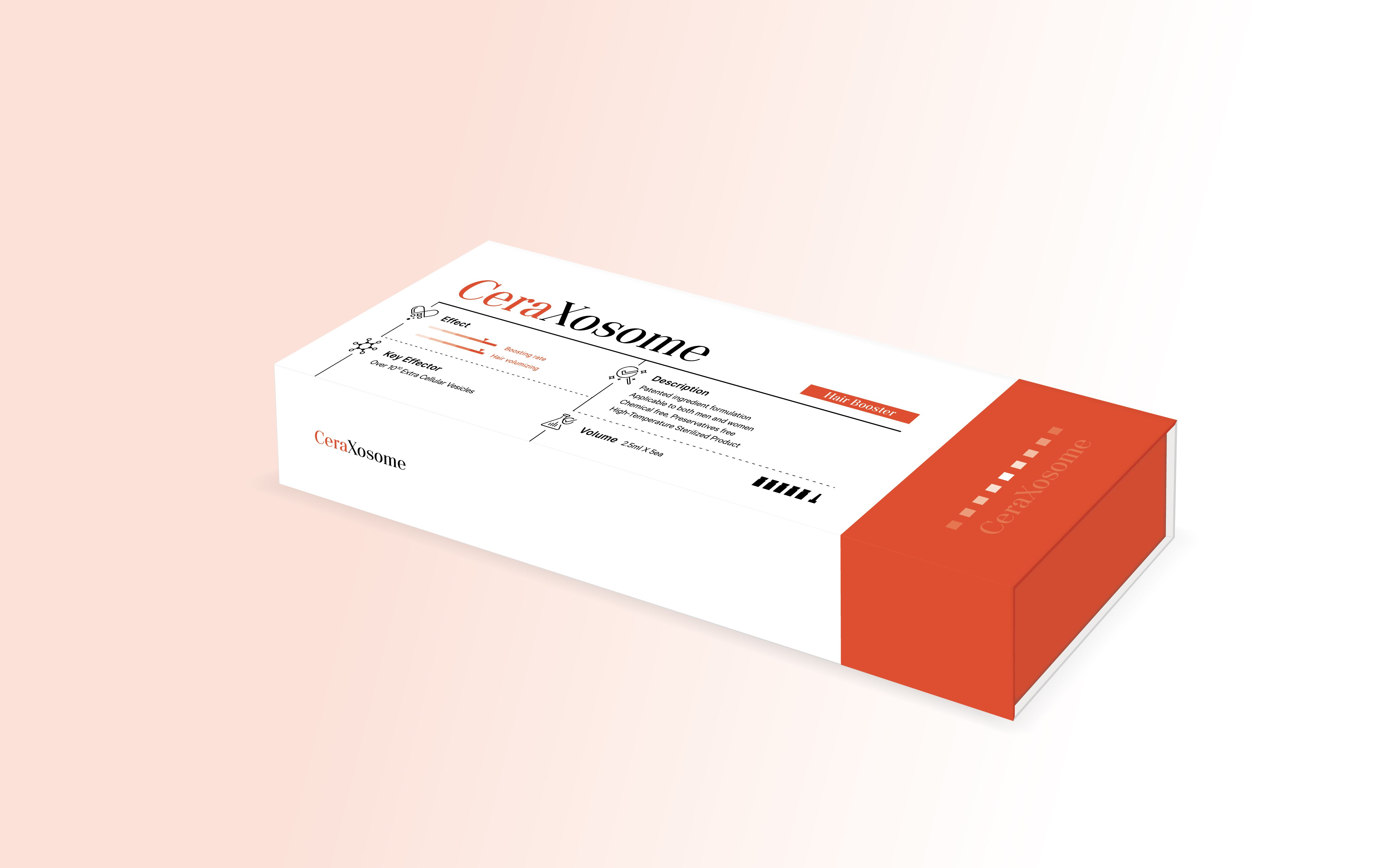
CeraXosome is VSTER lab’s professional hair booster based on Sphingomonas ferment extract. Alongside product information, explore published research on SoEVs, an extracellular-vesicle-enriched preparation from Sphingomonas olei.

White and orange CeraXosome product box on a pale peach background

CeraXosome at a glance

Brand
VSTER lab
Product type
Professional hair booster
Material
Sphingomonas ferment extract
Use
Professional scalp care, with suitability and use reviewed by the responsible professional.

PUBLISHED RESEARCH

From skin microbes to hair research.

Sphingomonas olei extracellular-vesicle research by CutisBio researchers, introduced alongside CeraXosome.

EXPERIMENTAL DERMATOLOGY

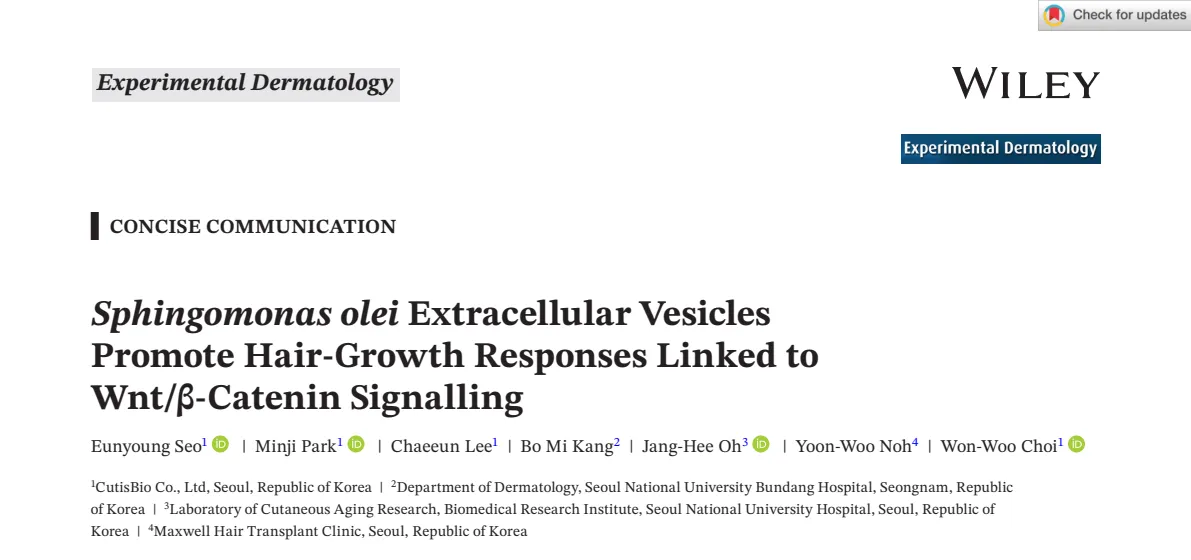
Title and author information from the published Sphingomonas olei extracellular-vesicle paper in Experimental Dermatology.
Published article · title-page excerpt

With CutisBio researchers

Experimental Dermatology · 2026

Sphingomonas olei Extracellular Vesicles Promote Hair‐Growth Responses Linked to Wnt/β‐Catenin Signalling

An EV-enriched preparation from skin-derived Sphingomonas olei (SoEVs) was studied in human dermal papilla cells and cultured human follicles. The study reported hair-growth-related responses and changes in Wnt/β-catenin-associated readouts.

  • Human dermal papilla cells
  • Cultured human follicles

DOI: 10.1111/exd.70284

Sphingomonas olei EV research
  1. SoEV research preparation

    Filtration of Sphingomonas olei culture supernatant enriches extracellular vesicles. Other soluble components may remain.

  2. Human dermal papilla cells

    Increased growth-related gene expression and Wnt/β-catenin-related readouts were observed.

  3. Cultured human follicles

    Shaft elongation, relative thickness maintenance and increased Ki-67-positive cells were observed ex vivo.

Experimental Dermatology · Exploratory in vitro and ex vivo research. The observations do not establish pathway causation or clinical efficacy of CeraXosome.

The industry problem

Understanding materials and documenting scalp care

  1. 01

    Professional scalp care calls for a clear explanation of the material and the evidence behind it.

  2. 02

    Published ingredient research offers a starting point for understanding materials and discussing potential applications.

  3. 03

    Photographs and scalp microbiome analysis can help document a care programme.

Our approach

From microbial fermentation to SoEV research

CeraXosome is based on Sphingomonas ferment extract developed through the SAC platform. A paper in Experimental Dermatology, co-authored by CutisBio researchers, provides context for research into related microbial materials.

The study evaluated an extracellular-vesicle-enriched preparation called SoEVs in human dermal papilla cells and cultured human hair follicles.

Sphingomonas olei EV research: what was observed?

Research preparation. Culture supernatant from Sphingomonas olei, isolated from healthy human skin, was filtered to obtain an extracellular-vesicle-enriched preparation. The paper calls this SoEVs. Electron microscopy and nanoparticle tracking analysis characterised its vesicles and particles.

Human dermal papilla cells. SoEV treatment was associated with increased IGF1 and VEGFA mRNA. Increases were also observed in phosphorylated AKT (p-AKT), phosphorylated GSK-3β (p-GSK-3β), total β-catenin, and the Wnt-related transcriptional readouts LEF1 and AXIN2.

Cultured human hair follicles. Compared with untreated controls, SoEV treatment was associated with greater shaft elongation, reduced culture-induced shaft thinning and more Ki-67-positive cells around the dermal papilla. These were observations in an ex vivo culture model.

Study scope. The follicle experiments used tissue from a single donor. Residual non-vesicular soluble factors may have contributed, and the responsible bioactive components remain unidentified. The Wnt/β-catenin findings show association, rather than proof that this pathway caused the responses. In vivo validation and clinical evaluation of the finished product were outside the study.

Read the published Experimental Dermatology paper · DOI: 10.1111/exd.70284

How it works

A professional care workflow

01020304
  1. Consult

    A professional reviews scalp condition and programme suitability.

  2. Document

    Photographs and scalp microbiome analysis, where appropriate, record the starting condition.

  3. Care

    The professional carries out scalp care following the product guidance.

  4. Review

    Programme records support discussion of observations and next steps.

Why it matters

Designed for performance, quality and fit.

  • 01

    Fermentation-based material

    Connects a microbial strain, fermentation development and material characterisation.

  • 02

    Published ingredient research

    Explains the material with the study setting and scope kept in view.

  • 03

    Professional assessment

    Product suitability and care are reviewed by the responsible professional.

  • 04

    Documented care

    Photographs and analysis can record scalp condition where appropriate.

Evidence

Research and supporting sources.

Only approved public evidence is listed.

Applications

Where the material applies.

Explore application areas and discuss the scope of your project with us.

  • Dermatology and aesthetic clinics

    Product evaluation for professional scalp-care programmes

  • Scalp-care partners

    Discussion of programmes combining care and scalp observation

  • Distribution partners

    Enquiries about regional supply and information for professionals

Public status

Contact us to discuss availability and the requirements for your application.

For professionals

FAQ

Frequently asked questions

What is CeraXosome?

CeraXosome is VSTER lab’s professional hair booster, based on Sphingomonas ferment extract.

How do SoEVs, CeraEV and CeraXosome differ?

The published paper uses SoEVs for an extracellular-vesicle-enriched preparation obtained from Sphingomonas olei cultures. CeraEV is a name used in company presentation materials, while CeraXosome is the finished product. The paper does not establish identical composition across these names or efficacy of the finished product.

What research is publicly available?

Experimental Dermatology published an exploratory study of SoEVs in human dermal papilla cells and ex vivo human hair follicles. It reports hair-growth-related responses associated with Wnt/β-catenin-related readouts. The DOI links to the publisher’s article page.

Is CeraXosome a hair-loss medicine?

CeraXosome is a professional scalp-care product, not a medicine or a treatment for disease. Medical conditions require assessment and treatment by a qualified clinician.

How can I ask about supply or technical information?

Use the CeraXosome technical enquiry or distribution enquiry to discuss product introduction, regional availability and professional materials.

Content: CutisBio · Last reviewed:

Next step

Discuss CeraXosome.

Tell us your intended use and the information you need. We will help you identify a way to start.